
Social Listening Examples for Marketing: 7 Practical Plays That Lead to Action
Use seven practical social listening plays to turn repeated public conversation patterns into messaging, campaign, launch, and reporting decisions.

Social listening examples in marketing are useful when they show how a repeated conversation pattern changed a real decision about messaging, campaign timing, positioning, partnerships, launch fixes, or reporting. The practical frame is simple: question, query, pattern, action, measure. If an example cannot name all five parts, it is still observation, not strategy.
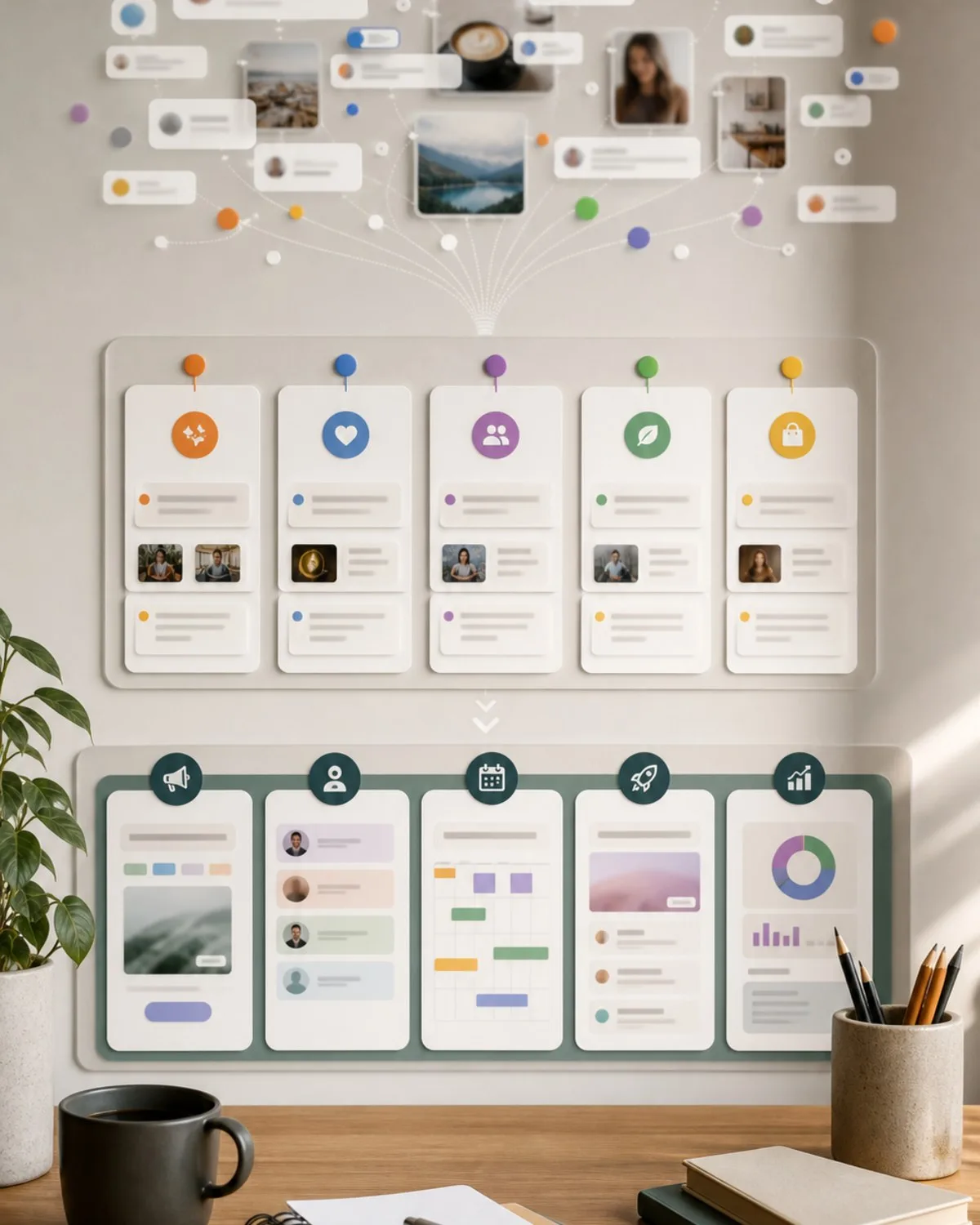
Most teams do not need more mentions. They need the smallest signal that can change a clear next move. The plays below are built for that job.
Start with a reusable framework, not a pile of mentions
The most useful social listening examples start with one decision and end with one owner plus one small metric. That keeps listening from collapsing into passive monitoring. Recent strategy guides keep returning to the same sequence: define the goal, build the query, read for patterns, route the signal, and check the response.
Question -> Query -> Pattern -> Action -> Measure
- Question: What decision is blocked right now?
- Query: Which words, complaints, comparisons, or themes can surface the signal?
- Pattern: What repeats often enough to treat as more than noise?
- Action: Who changes the asset, reply path, brief, or launch note?
- Measure: Which small outcome tells you the change helped?
This frame forces scope early. You are not trying to hear everything. You are trying to hear enough to improve one live decision. The same discipline matters in strong online communities too: repeated patterns tell you more than one loud event.
Choose one decision before you choose a dashboard
Decision-first listening works better than dashboard-first listening because it narrows what counts as a meaningful signal. "Listen to everything" gives a small team no rule for what to ignore. A better start is narrower: improve onboarding copy, sharpen positioning, time a campaign, watch a launch, or shape a weekly report.
Once the decision is clear, the query gets tighter and the review gets faster. Name the decision before you name the metric.
Separate signal capture from response ownership
Listening becomes valuable when the signal has an owner and a deadline. Many examples die inside the dashboard because the team found something useful but never decided who moves next. Marketing may own the query, but the response may belong to content, support, partnerships, product, or launch operations.
Keep the routing plain. If complaint wording repeats, content or support updates the explanation. If a topic starts rising, campaign or editorial decides whether to act. Add owner and review date before you add more keywords.
Use the example variation that matches the decision
The right listening example depends less on channel and more on decision type, urgency, and action path. Two teams can see the same spike and still need different responses. One may need a fast clarification. Another may only need a note for a future brief.
Treat signal strength as a prioritization cue, not proof.
Seven social listening examples marketers can actually reuse
Most practical social listening examples fall into a short list of repeatable patterns tied to different marketing decisions. You do not need dozens of stories. You need the play that matches the job.
Example 1. Cluster recurring complaints to fix onboarding or message fit
Complaint clustering works when you need to separate one loud reaction from a repeated friction pattern. If the same confusion keeps showing up around one feature, promise, or step, the issue may live in onboarding copy, landing-page framing, help content, or support replies.
What matters is repeated wording, not volume alone. This is often the easiest starting play for a small team because the signal and fix sit close together.
Example
Watch for repeated confusion about one feature or promise. Cluster the phrasing, update the explanation in one public asset, then review whether that complaint theme softens over the next two to four weeks.
Example 2. Mine competitor pain points to sharpen positioning
Competitor pain-point listening is useful when your team needs clearer positioning or stronger objection handling. Competitor conversations can reveal unmet expectations around setup time, support quality, pricing logic, or feature clarity.
The point is not to copy a rival's audience. It is to spot which frustration your brand can answer more clearly.
Example
Track recurring complaints about a rival's slow setup. Test a tighter proof block around fast setup in your own copy, then watch qualified replies, deeper page reads, or better-fit questions rather than reach alone.
Example 3. Catch trend timing early enough to shape a campaign
Trend-timing plays work when you need to judge whether a topic is becoming relevant before the moment turns crowded. The useful signal is not every spike. It is the rising theme that clearly connects to your audience's problem, language, or buying mood.
Campaign teams often miss the window in both directions. They act too early on thin evidence or too late after the topic has gone flat.
Example
Notice a rising conversation around one customer problem, publish one fast and relevant asset, then review saves, shares, and qualified comments to judge whether the angle deserves a larger campaign.
Example 4. Mine real audience language for copy and creative briefs
Language-mining works because audiences often explain the problem in words the brand would never choose on its own. Repeated phrases, objections, and comparisons can sharpen headlines, hooks, FAQ copy, ad angles, and briefing notes.
This play helps most when messaging feels polished but vague. You do not need every phrase. You need the repeated language that makes the problem easier to recognize.
Example
Pull the five most repeated phrases around one pain point, rewrite one headline set and one FAQ answer with that wording, then compare comment quality or time on page against the old version.
Example 5. Find creator or partner fit through natural affinity
Creator-discovery plays work when you need partnership fit, not borrowed reach. The useful signal is natural category alignment: people who already talk about the problem, the audience mood, or the purchase context in a way that feels credible without heavy coaching.
Reach still matters, but fit matters first. A smaller creator with stronger topical alignment can produce a cleaner brief and a more believable partnership.
Example
Build a short list of creators already discussing the problem category, rank them by relevance, tone, and audience fit, then test one small collaboration brief before expanding the program.
Example 6. Monitor a launch so you can fix friction while interest is high
Launch-monitoring plays work because early conversation patterns reveal friction while attention is still high enough to respond. That friction may be repeated questions, misread pricing, unclear proof, confusing setup steps, or a promise that people interpret differently from the way the team intended.
This is a routing problem as much as a marketing problem. During launch week, the value of listening is speed between signal and correction.
Example
Track launch-week questions and sentiment direction, route repeated friction to the landing page or support macros, then review the next wave of comments for fewer versions of the same objection.
Example 7. Map category conversations to plan better content and reporting
Category-conversation mapping works when your team needs a smarter content roadmap or a cleaner report on what the audience keeps caring about. The signal here is recurrence across weeks: themes that keep resurfacing, questions that look under-served, and topics that feel saturated.
This play turns listening into planning input. Repeated theme presence is a strong topic input, not full demand proof.
Example
Review four weeks of category conversations, group the recurring themes, choose one under-served question for a new asset, then compare the response quality with the old topic mix.
Why these seven plays work
These plays work because they convert messy conversation into a small set of decision advantages: clarity, contrast, timing, language fit, partner fit, response speed, or better planning. The surface examples look different, but the logic is the same.
Once you know the mechanic, you can ask a better question: what repeated pattern would make the next decision easier right now?
Common mistakes that make social listening examples misleading
Social listening examples become misleading when teams confuse noise for pattern, visibility for proof, or dashboards for decisions. The easiest failure modes are usually operational.
- Treating one loud post like a trend. One vivid reaction is easy to remember and easy to overweight. Wait for repeated wording or repeated themes before changing the plan.
- Confusing monitoring with listening. Monitoring tells you what appeared. Listening tells you why the pattern matters and what to do next.
- Trusting sentiment labels too literally. Automated labels are useful for triage, but they can miss sarcasm, mixed reactions, or local language cues.
- Forgetting the missing data. Public conversation does not cover private groups, gated spaces, every region, or every customer type.
- Collecting signals with no owner. If nobody owns the next step, the example stays interesting but useless.
- Reporting reach without a decision outcome. Impressions and mention counts are not the same thing as a better brief, clearer page, faster fix, or stronger partner choice.
Keep the proof limit visible. Public conversation is directional, not complete truth.
Reusable checklist and example-to-action rubric
A lightweight rubric turns a listening example from inspiration into repeatable practice. If you can fill in the fields below, you are ready to run a small pilot. If you cannot, the example is still too vague.
14-day pilot
- Pick one blocked marketing decision, not a broad listening goal.
- Build one query around repeated complaints, comparisons, themes, or creator talk.
- Review the results on a fixed cadence that one owner can maintain.
- Save only the patterns that repeat or clearly affect the live decision.
- Route one pattern to one owner with one due date.
- Change one asset, reply path, brief, or launch note.
- Track one small outcome metric plus one proof-limit note.
- Decide at day 14 whether to expand, revise, or stop the play.
Required artifact: Example-to-action rubric
The best reusable asset is the one a marketer can copy next week. The outline called for a matrix, so the compact version below keeps the same fields without a pipe table.
Example-to-action rubric
- Complaint clustering: Best used when confusion repeats around one feature or promise. Watch recurring questions and complaint phrasing. First action: update one explanation asset. Owner: content or support. Success metric: fewer repeated versions of the same question. Test window: 2 to 4 weeks. Proof limit: less confusion does not prove one edit caused the shift.
- Competitor pain-point mining: Best used when positioning feels vague. Watch repeated rival complaints and unmet expectations. First action: tighten one contrast claim. Owner: messaging or growth. Success metric: higher-quality replies or better-fit questions. Test window: 2 weeks. Proof limit: rival complaints do not equal total market demand.
- Trend timing: Best used when a theme is rising and relevance looks strong. Watch theme acceleration, angle fit, and saturation. First action: publish one fast test asset. Owner: campaign or editorial. Success metric: saves, shares, and qualified comments. Test window: 7 to 10 days. Proof limit: early fit does not guarantee campaign lift.
- Language mining: Best used when copy sounds polished but generic. Watch repeated phrases, objections, and comparisons. First action: rewrite one headline set and one FAQ answer. Owner: content or paid media. Success metric: stronger engagement quality or deeper page reads. Test window: 2 weeks. Proof limit: a few vivid quotes do not speak for every buyer.
- Creator or partner fit: Best used when reach is available but relevance is unclear. Watch natural category talk, tone, and audience fit. First action: test one narrow brief. Owner: partnerships. Success metric: cleaner response quality or better-fit inbound interest. Test window: one pilot cycle. Proof limit: affinity does not guarantee safe fit or conversion.
- Launch monitoring: Best used when attention is high and confusion can spread fast. Watch repeated questions, sentiment direction, and broken expectations. First action: fix one page, macro, or clarification path. Owner: launch lead with support or content. Success metric: fewer repeated objections in the next comment wave. Test window: daily during launch, then weekly. Proof limit: calmer comments do not prove every hidden issue is solved.
- Category mapping: Best used when the team needs a smarter content plan or report. Watch recurring themes, under-served questions, and topic saturation. First action: choose one new asset or report angle. Owner: editorial or strategy. Success metric: more qualified engagement on the new theme. Test window: 4 weeks. Proof limit: theme frequency is not the same thing as full demand size.
Social listening examples are strongest when they end with a smaller, clearer next move. If you want a wider workflow view after the pilot, use that same discipline to review the broader workflow features your team may need next.
FAQ
What is a simple social listening example in marketing?
A simple starting play is complaint clustering. If the same question or frustration keeps repeating, update the onboarding copy, landing-page message, or help path tied to that confusion and then review whether the pattern softens.
When should a small brand use listening instead of a survey?
Use listening when you need natural wording and early directional signals from public conversation. Use a survey when you need structured answers to a precise question that public chatter cannot answer cleanly.
Which metrics matter most for a first test?
Start with a small set: mention volume, sentiment direction, repeated themes, share of voice when the decision involves competitors, and one outcome metric tied to the action you changed.
Can social listening prove that a campaign worked?
No. It can show reaction patterns, topic shift, and directional sentiment movement, but campaign impact still needs a separate business metric and careful attribution.
Read next
Continue with adjacent articles that support the same public-viewing workflow.
guides
Social Listening Tools: How to Choose the Right Fit Without Overbuying
Choose a social listening setup by use case, signal quality, workflow fit, and pilot risk instead of buying the largest dashboard by default.
guides
Social Listening in Marketing: Turn Audience Signals Into Action
Use social listening as a marketing workflow: start with a business question, review public signals, document the decision, and route the next action.
news
Social Commerce Revolution: Turning Scrollers into Shoppers
Audit the visible path from short-form curiosity to offer clarity, comment friction, proof, and the next step without guessing hidden sales data.