
From Whispers to Trends: What ASMR Style Audio Actually Looks Like on TikTok
Spot ASMR-style TikTok audio through visible hooks, recording cues, and repeated formats, then test the style without losing subject clarity.
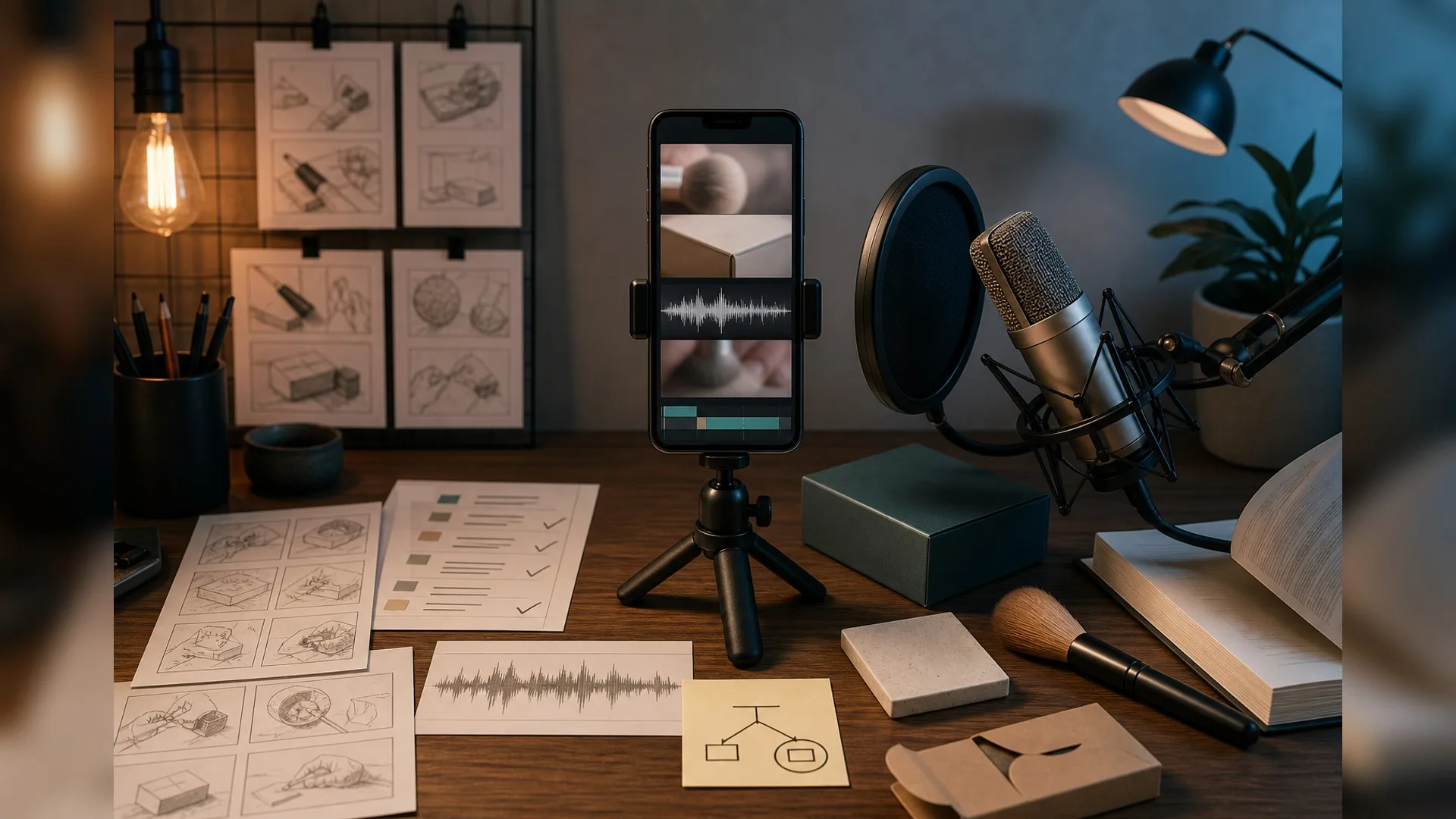
An ASMR style TikTok hook usually opens with close-mic whispers, soft spoken narration, or crisp object sounds such as tapping, brushing, page turns, packaging clicks, or light product handling, while the screen still names a specific topic. That much is visible in public. What public viewing cannot confirm is whether the sound itself caused distribution, ranking, or retention. If you are reviewing this style for your own content, the useful question is simpler: which cues are actually present, and do they make the idea easier to understand or just more atmospheric?
What an ASMR hook looks like in the first seconds
Not every quiet TikTok is using an ASMR hook. The style is usually recognizable because sound is moved into the foreground early. A hand touches the product before the spoken explanation starts. A box lid clicks shut close to the microphone. A whisper or near whisper delivers the opening line. The cuts slow down enough for one sound to land clearly.
The hook still needs a subject, not just a mood. If the first frame shows a candle jar, tissue paper, and a whispered "listen to this," viewers may notice the texture but still miss the point. If the same opening says "packing fragile candles for summer shipping" on screen, the sound has a job. It supports the topic instead of replacing it.
That distinction matters for creators, social media managers, and small brands. In a TikTok content strategy, ASMR works best as a presentation layer wrapped around a clear idea, product behavior, or process. It is less useful when the quietness becomes the only memorable part.
The audio cues you can compare without private data
Several cues show up repeatedly in public posts when a creator is leaning into ASMR style audio:
- Mic proximity: the voice or object sounds very close, with little room echo and little distance from source to listener.
- Object-led sound: tapping nails on packaging, sliding paper, folding fabric, snapping a cap shut, brushing a surface, or handling a tool slowly enough for the sound to register.
- Reduced music bed: there may be no music at all, or the music sits low enough that the tactile sound stays in front.
- Deliberate pacing: fewer cuts, slightly longer shots, and pauses that let one sound finish before the next action starts.
- Sound matched to framing: close camera shots make it obvious which object is creating the sound.
Public reaction language is useful too. Comments such as "the zipper sound is so clean," "I needed headphones for this," or "this packaging sounds expensive" tell you people noticed the audio texture. Comments like "which tape are you using," "that ceramic wrapping method is smart," or "now I get why you folded the insert that way" show something stronger. They suggest viewers noticed both the sound and the subject.
Neither kind of comment proves causation. They are still clues. The more useful comparison is whether the sound cues and the named topic keep pointing to the same thing across several recent posts.
Where the style sharpens a brand voice
ASMR style audio tends to fit best when the product or process already contains real texture, precision, or ritual. Packaging videos, skincare texture demos, stationery, ceramics, keyboards, coffee prep, jewelry handling, repair work, cleaning clips, and careful unboxings all give the sound something concrete to describe.
It can also support an educational tone when the creator's voice is calm and exact. A whisper is not required, but the soft spoken style can work when it signals care, craft, or close attention. A small brand that sells handmade goods may benefit if the opening sound reinforces the same qualities the product claims to have: careful assembly, material detail, or premium finish.
The fit is strongest when the brand would still make sense without the sound. If a candle brand is already posting about wax texture, vessel finish, packaging quality, and shipping care, subtle audio can make that world feel more coherent. If the audio is the only distinctive layer, the identity stays thin.
Where it muddies the message
The style can clash with brands or creators who need urgency, speed, blunt clarity, or overt social energy. A founder update about a deadline, a public service reminder, a live event announcement, a sports brand campaign, or a punchy opinion video often loses force when it is softened too much.
It can also create the wrong reading for trust sensitive topics. If the message requires authority first, such as finance, legal, medical, or crisis communication, whispered delivery can feel stylized in a way that competes with credibility. The same problem shows up when the audience needs a fast explanation and the video spends too long admiring sound before naming the point.
For small brands, the common failure mode is simple: the packaging sounds premium, but the viewer leaves unable to name the item, use case, or differentiator. That is not a sound problem. It is a clarity problem.
Keep the topic name stronger than the texture
The easiest way to keep ASMR useful is to make the topic easier to repeat than the sound. The on-screen text, opening line, and object in frame should all answer the same basic question: what is this video about?
That overlaps with the logic behind TikTok scripts that make the first beats legible. Searchability is only part of the benefit. Clear topic naming also gives the quiet audio a specific job to do. "Soft sounds while packing ceramic mugs" is legible. "Listen to this" is not.
One practical formula is topic plus action plus object. Examples:
- "Packing ceramic mugs so the handles do not crack"
- "Testing three keyboard switches with the mic close up"
- "How this serum texture pills under sunscreen"
Each example gives the sound a frame. Viewers can understand the subject before they decide whether the texture feels satisfying, calming, premium, or strange.
A measured way to test whispers inside a content strategy
The safest way to test this style is to treat it as one production variable, not as a theory about hidden platform preference. The same practical testing mindset applies to B2B TikTok content planning, where small differences in framing can change how quickly a clip becomes legible. That does not mean a whisper or tapping sequence will rescue a weak topic.
For a clean test, keep the subject constant and vary the sound treatment across a small set of posts. For example:
- Publish one version with normal voiceover.
- Publish one version with soft spoken close mic narration.
- Publish one version where object sound leads and spoken explanation comes second.
Keep the first frame, topic label, basic shot order, and offer as similar as possible. Then compare what you can actually observe. On the public side, look at comment language. Do people repeat the named topic, ask clearer follow up questions, or only talk about the sound? On your own account, if you have first party analytics, compare hold rate and completion carefully, but avoid turning one post into a general rule.
This approach is more useful than asking whether ASMR is "working" in the abstract. It tells you which sound treatment best supports this topic, for this audience, with this brand voice.
Use comment language to see whether sound supported the idea
After publishing, the comment section can help you judge clarity. If viewers mostly say "so satisfying," "I love the tapping," or "this sounds expensive," they noticed the texture. That can be fine for some brand goals, but it is not enough on its own.
Stronger signs appear when comments can restate the subject or extend it. "I never thought about wrapping the handle first," "which switch was the quietest," or "now I understand why this formula pills" show that the audio made the process easier to stay with, not harder to decode.
That is the standard worth keeping. ASMR style audio can add intimacy, pace, and detail to a TikTok hook, but it should make the topic easier to absorb, not harder to name. When the sound supports the idea, it can make a short video easier to follow. When it replaces the idea, it only makes the video quieter.
Decision Rule
Use ASMR-style audio only when the sound makes the subject easier to understand. If viewers can name the texture but not the topic, the sound has replaced the idea instead of supporting it.
FAQ
What counts as an ASMR-style hook?
Close-mic voice, tactile object sounds, slower cuts, and sound-matched framing can all signal the style.
Does ASMR audio guarantee better reach?
No. Public viewing cannot prove that sound caused distribution, ranking, or retention.
How should I test it?
Keep the topic and shot order similar, then compare normal voiceover, soft spoken narration, and object-led sound.
Read next
Continue with adjacent articles that support the same public-viewing workflow.
guides
The Rise of TikTok as a Learning Platform: EdTok and the Knowledge Economy
Read EdTok as a teaching format through topic naming, one-question lessons, repeatable series, and cross-profile consistency without overclaiming expertise.
guides
Mastering the 3-Second Hook: How to Stop the TikTok Scroll and Boost Engagement
Review TikTok hooks through topic naming, first-scene order, early proof, and whether the opening promise matches the clip.
guides
The Batch Theory: Why Creating TikTok Content in Series Drives Algorithm Success
Turn TikTok batches into recognizable series through clear topic names, stable hook-to-proof-to-payoff structure, and visible pattern checks that do not treat batching as a reach hack.