
TikTok for B2B: How 'Boring' Brands Are Finding Creative Success
See how B2B brands make complex offers clearer on TikTok through plain topics, repeatable series, and visible proof styles.
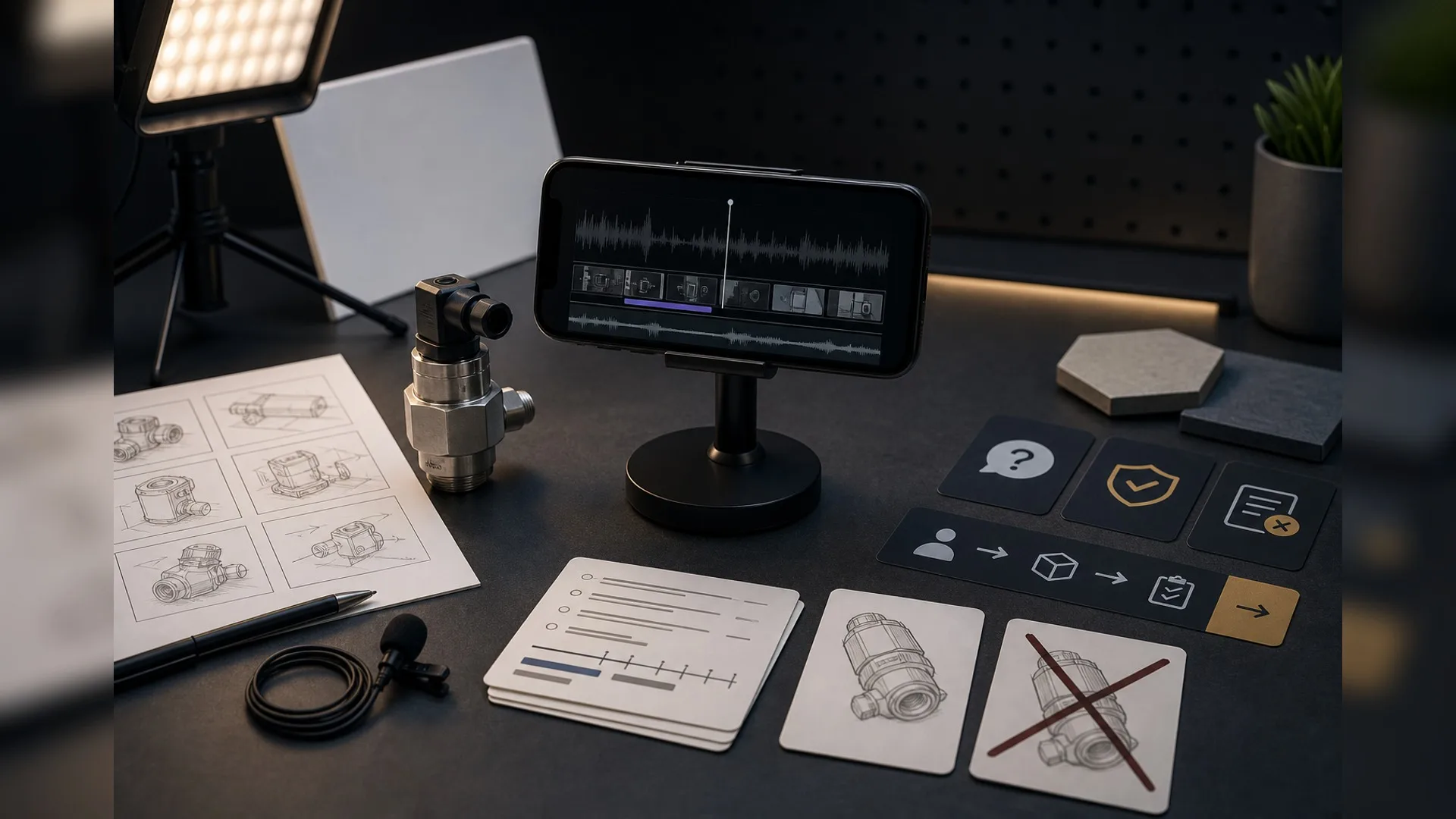
Yes, TikTok can work for niche, technical, and trust-heavy B2B brands when you define creative success narrowly: a cold viewer quickly understands what you sell, why your perspective is useful, and what kind of videos to expect next. This article stays with visible evidence, so the limit is real: you can compare topics, series structure, and proof style, but you cannot prove leads, pipeline impact, or why one post reached more people than another.
What creative success actually looks like for a B2B TikTok account
For a B2B brand, creative success is usually not a vanity metric story. It is a clarity story.
You can check for it in public by asking a few simple questions after watching several recent posts:
- Can a first-time viewer tell what problem the brand helps solve?
- Do the videos return to a recognizable set of topics instead of jumping between unrelated ideas?
- Is there a repeatable series structure, not just isolated one-off posts?
- Does the account make expertise visible through examples, comparisons, or demonstrations?
If the answer is mostly yes, the account is already doing something useful. It is making a complex offer easier to recognize. That is a more realistic definition of creative success for B2B than promising inbound demand from public metrics alone.
Which B2B topics translate well into short video
The strongest B2B topics on TikTok are usually the ones that turn a fuzzy promise into one visible question. That is where short video becomes practical instead of theatrical.
Topics that often translate well include:
- product demos that show one task, one feature, or one outcome
- process clips that reveal how work actually gets done behind the scenes
- expert explainers that answer one technical question in plain language
- FAQ answers based on recurring buyer confusion
- myth-busting clips that correct a common assumption
- objection handling around setup time, complexity, price logic, or switching costs
- side-by-side comparisons between two approaches, tools, or workflows
- founder or team perspective when the person on camera can explain trade-offs clearly
This works best when the topic name is concrete enough for a stranger to repeat back. If your account talks about "operational efficiency" in one post and "digital transformation" in the next, the lane stays blurry. If it repeatedly talks about faster inventory counts, fewer invoice errors, better field reporting, or cleaner client onboarding, the lane becomes easier to recognize. That same discipline is what makes EdTok-style teaching lanes readable instead of generic.
Formats that make a hard-to-explain offer easier to grasp
The most useful B2B TikTok formats do one thing well: they reduce explanation time.
Here are a few formats that travel well across technical categories:
- Screen plus voiceover: show the exact step while a team member narrates what the viewer is seeing.
- Before-and-after comparison: contrast the messy workflow with the cleaner workflow, even if the difference is small.
- Annotated teardown: pause on a document, interface, dashboard, packaging sample, or process map and explain what matters.
- One-question FAQ: answer a single buyer question in 30 to 45 seconds instead of squeezing five answers into one clip.
- Objection-first clip: start with the hesitation, then explain what is true, false, or incomplete about it.
- Expert reaction: respond to a common industry belief and explain where it breaks down in practice.
For example, a hypothetical compliance software company could record a short clip called "What actually slows down policy sign-off?" and walk through three visible bottlenecks on screen. A hypothetical industrial supplier could compare two materials in the same camera setup and explain when each one fails. Neither example needs trend mimicry to be watchable. It needs a clear question, a visible teaching surface, and a useful point of view.
That is also why conversion-focused TikTok scripts work best when each video isolates one problem instead of trying to summarize the whole company in one post.
How to turn buyer questions and objections into a repeatable series
One of the simplest content systems for a small B2B brand is to mine recurring questions from sales calls, onboarding conversations, customer support, proposals, and demos. You do not need to reveal private conversations. You just need to notice which questions keep showing up.
The useful move is to group those questions into a small number of repeatable lanes.
For example:
- questions about speed become a "how long does this really take?" series
- questions about complexity become a "what setup actually involves" series
- questions about price become a "what changes the cost" series
- questions about switching become a "what the first 30 days look like" series
Each lane can then produce multiple short videos without sounding repetitive because the angle changes while the audience problem stays the same.
If you want a practical rule, build one video around one objection, one piece of proof, and one audience type. A clip that tries to answer every objection at once usually becomes vague. A clip that answers one question for one kind of buyer is easier to understand and easier to repeat as a series.
Visible signs the account has a clear content lane
You do not need private analytics to see whether a B2B account has a lane. You can compare the visible surface of the account and look for pattern strength.
Useful public signs include:
- the same buyer problem appears across multiple recent posts
- opening lines quickly name the situation, not just the brand
- the account repeats one or two visual proof styles instead of reinventing the format every time
- pinned posts and recent uploads point to the same audience and message
- viewers ask more specific follow-up questions over time
- the team sounds like it knows which myths, objections, and use cases it wants to own
None of those signals proves revenue impact. They do show that the account is becoming easier to categorize. That matters because a clear lane makes future posts less fragile. The brand is no longer depending on novelty alone.
When personality or humor helps and when instructional content is stronger
Personality helps when the person on camera makes the explanation easier to trust or easier to follow. A founder, operator, engineer, consultant, or account lead can add value simply by sounding precise and grounded.
Humor helps when it sharpens a real misunderstanding. For example, a light skit about how buyers imagine implementation works can be effective if the clip quickly returns to the real explanation. Humor stops helping when it becomes the main memory and the actual offer disappears.
Instructional framing is usually stronger when the category depends on precision, risk, or buyer confidence. If the topic touches security, compliance, quality control, or expensive workflow changes, clarity usually beats performance. The brand does not need to act like an entertainment account. It needs to make expertise easy to watch.
If you reuse the same message on another channel, how do you test clarity publicly?
The easiest cross-platform check is to see whether the same positioning still makes sense away from TikTok's feed. Open the other public channel and compare the bio, pinned posts, saved surfaces, and recent visible content with the message used on TikTok.
You are looking for consistency, not identical formatting. If the TikTok account repeatedly explains "how clinics reduce billing errors" but the secondary channel says only "helping businesses grow," the message got weaker in translation. If the same audience, problem, and proof style show up on both public surfaces, the positioning is probably strong enough to travel.
This is a public clarity test, not a conversion test. You can compare whether the topic naming survives the move. You cannot prove which platform produced the better business result from public signals alone.
The practical takeaway
TikTok is workable for B2B brands when the goal is not "go viral" but "be understood quickly and repeatedly." The most durable accounts make expertise legible through demos, explainers, comparisons, objections, and clearly named series. If a stranger can watch a few posts and explain what the brand helps with, who it helps, and what type of questions the account answers, that is a credible form of creative success.
Decision Rule
A B2B short-video idea is ready when it answers one buyer question, shows one proof surface, and uses one repeatable format. If the video needs a long caption to explain the offer, simplify the topic before recording.
FAQ
Can technical B2B topics work on TikTok?
Yes, when the clip turns a complex offer into one clear question, example, comparison, or objection.
What should a boring brand avoid?
Avoid chasing trends that hide the buyer problem. Clarity beats novelty for trust-heavy categories.
What is the best public audit?
Check whether recent videos repeat the same audience problem, proof style, and next step.
Read next
Continue with adjacent articles that support the same public-viewing workflow.
guides
The Batch Theory: Why Creating TikTok Content in Series Drives Algorithm Success
Turn TikTok batches into recognizable series through clear topic names, stable hook-to-proof-to-payoff structure, and visible pattern checks that do not treat batching as a reach hack.
guides
From TikTok to Traditional Media: How Viral Creators Are Crossing Platforms
Compare bio framing, display names, feed topics, highlights, and public appearances after a TikTok breakout without guessing deals or negotiations.
guides
TikTok SEO for Gen Z Search: How Gen Z Finds Content
See TikTok SEO in practice through topic naming, profile keywords, recognizable content lanes, and clear limits on what public review can prove.