
Why Local Travel Content Is Outperforming Luxury Destinations
Identify the cues that make local travel content more useful than luxury mood shots, with a simple audit for bios, highlights, captions, and trip logic.
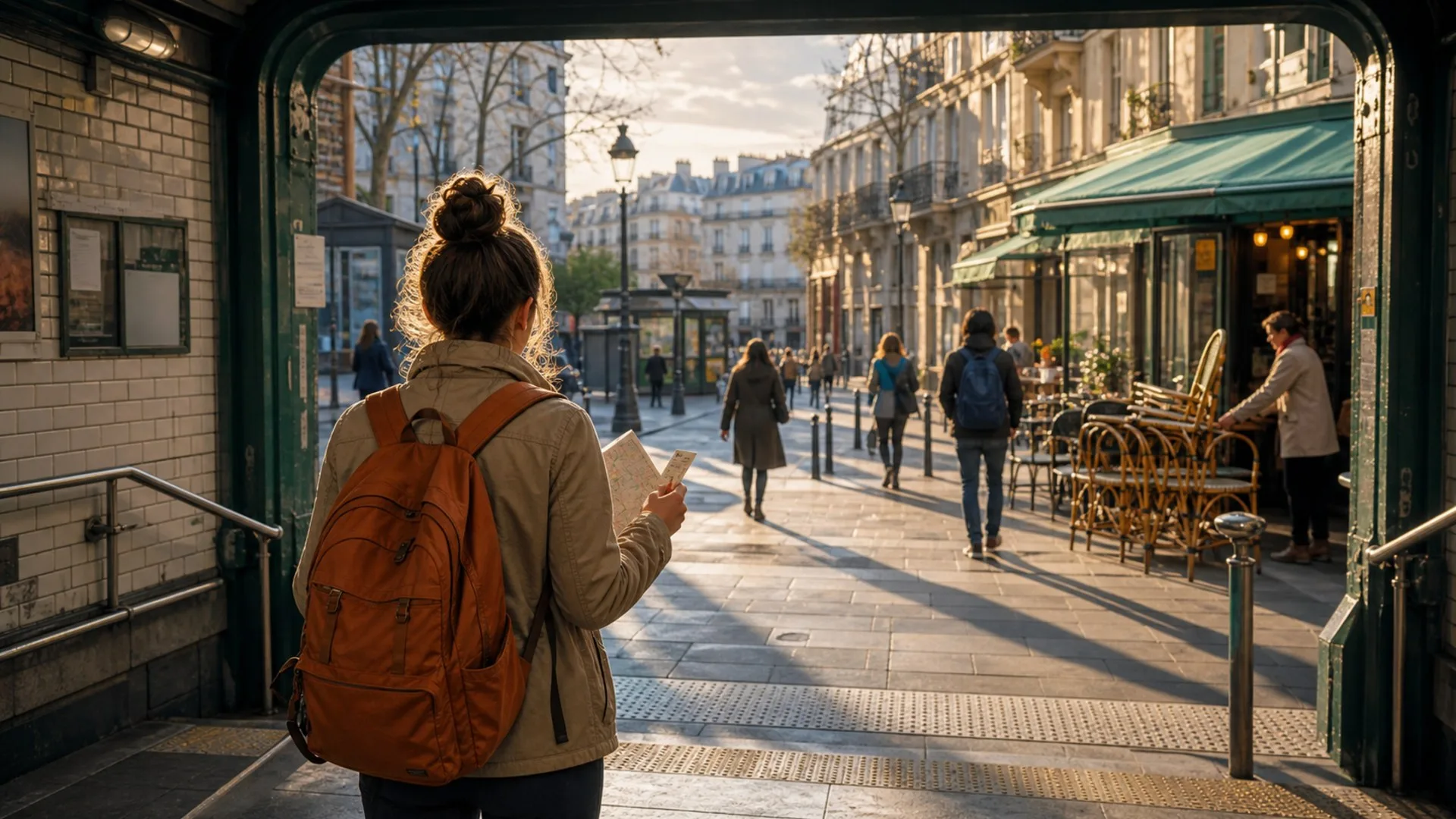
A post that names the station exit, the eight-minute walk, and the quiet hour usually does more for a stranger than a perfect pool shot with no next step. Local travel content often outperforms luxury destination content in that narrow sense: it helps a traveler place a stop inside a real day. Recent signals from Booking.com, Hilton, Expedia, and large guide publishers point the same way. Beautiful travel imagery still matters, but practical local cues increasingly shape whether a reader can use the idea.
That boundary matters. This article is about public-facing usefulness, not guaranteed reach, bookings, saves, or hidden ranking behavior. The question is simpler: can a stranger tell where this fits, when it works, who it suits, and what friction comes with it?
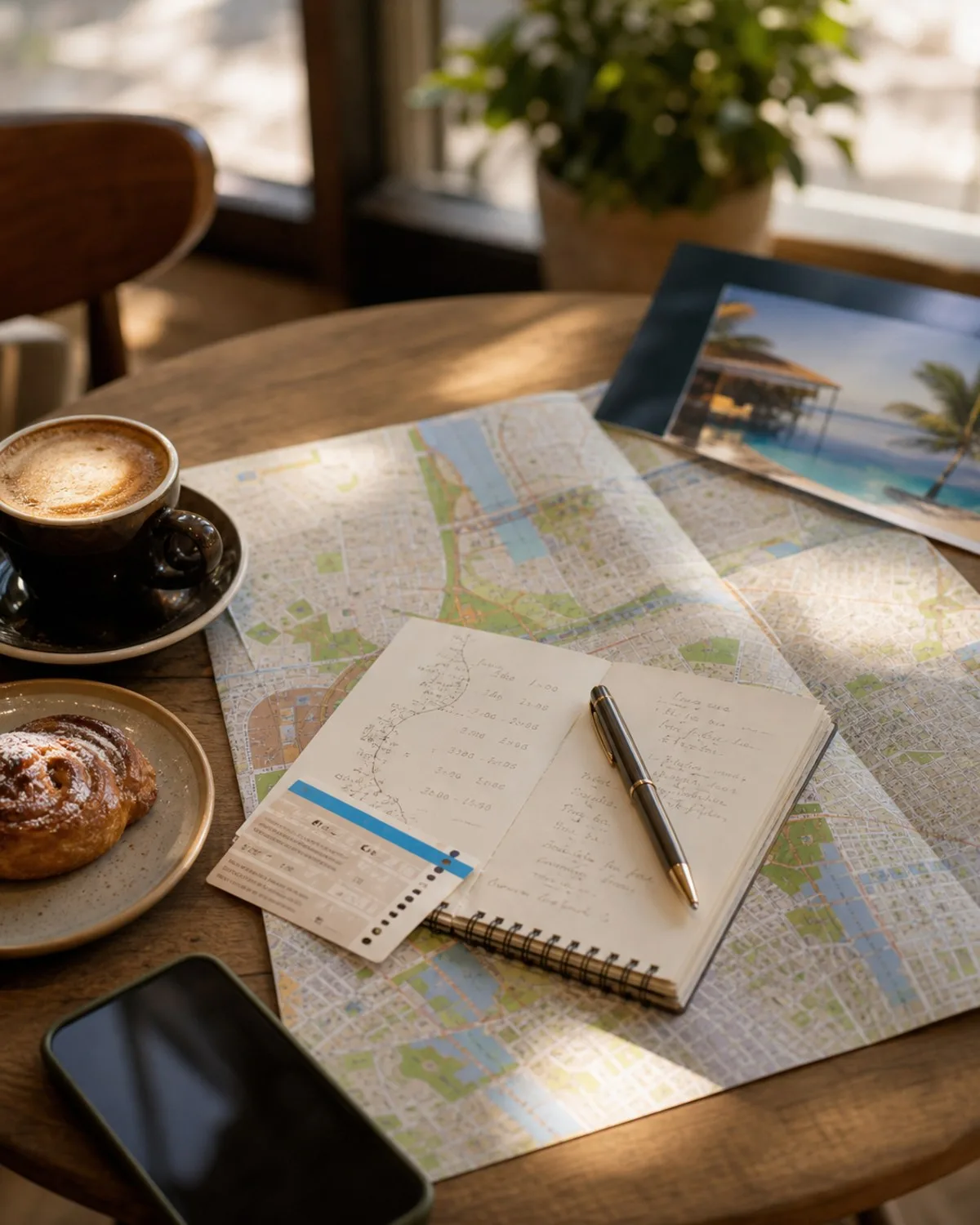
What "outperforming" really means here
In travel content, outperforming should mean more usable context per second of attention, not more glamour. A luxury frame can be stunning and still leave a traveler with no idea whether the place belongs in their morning, their budget, or their route. Local travel content wins when it closes that gap fast.
The most useful way to evaluate this is a simple framework the article will call placeability. Placeability asks whether the content helps a stranger place the stop inside a real day rather than admire it in isolation. A post, caption, or profile becomes easier to use when it answers four questions early:
- Where is this in city terms, not just city-name terms?
- When does it work best, and when does it change?
- Who is it best for?
- What friction comes with it?
Guide publishers do this almost immediately. Booking.com's Austin guide opens by mapping neighborhoods and matching them to ways people like to explore. AFAR's New York City guide surfaces best time to go, how to get around, and local travel tips near the top of the page. Those structures matter because atmosphere is not the same as planning value.
That is why "placeability" and "trip-fit cue stack" are useful frames here. They are not industry terms or platform metrics. They are a practical way to judge whether the content is doing public-facing work.
Why travelers keep leaning toward local context
Readers are primed to value local context because recent travel research keeps pointing toward local recommendations, less-obvious trip choices, and community-aware decision making. That does not mean luxury travel lost appeal. It means the local layer now carries more weight in how people plan and judge a trip.
Hilton's 2025 slow travel report says 74% of travelers want recommendations from locals when traveling. The same page says 73% of global travelers often seek authentic, local experiences when traveling with children. Expedia's Unpack '25 report adds a complementary signal: 63% of consumers said they were likely to visit a "Detour Destination" on their next trip, which Expedia defines as a less-crowded stop near a more obvious hotspot. Booking.com's 2025 travel predictions also highlighted growing interest in authentic, off-the-beaten-path experiences.
Booking.com's 2025 community research says 53% of travelers are conscious of tourism's impact on local communities, 73% want the money they spend to go back to the local community, 77% seek authentic experiences representative of local culture, and 69% want to leave places better than they arrived. That makes neighborhood context and local fit easier to justify without turning the article into a moral lecture against luxury travel.
Even upscale hospitality brands are leaning into this shift. Hotel Indigo's 2023 global neighborhood campaign was built around the idea that people, places, and experiences at neighborhood level help define the stay. Premium travel brands also see neighborhood identity as part of the value, not a side note.
The local cues that make travel content useful
Local travel content wins when it tells the reader how the place behaves, not just how it photographs. The strongest cues are often small: the district name, the station logic, the line about crowd rhythm, or the note that a stop is worth it only before 9 a.m. Those details remove uncertainty.
Google's Local Guides page explains the practical side of this clearly: reviews, photos, and local knowledge help people discover places and navigate or explore them. Travel publishing works the same way. The more a post reduces the gap between seeing a place and using a place, the more valuable it becomes.
Geography and access cues
Geography and access cues are the fastest way to make a place legible. Travelers usually do not need turn-by-turn directions. They need enough spatial logic to know whether a stop is convenient, isolated, uphill, walkable, or best treated as part of a cluster.
That is why neighborhood guides tend to work. Booking.com's Austin page maps districts, explains walkability, and ties each area to a type of trip. A local post can do the same at smaller scale. "Ten minutes uphill from the station" is more useful than "easy to reach." One line of access logic often does more than another wide shot.
Timing and pace cues
Timing cues turn a beautiful frame into a more honest planning signal. The same market, ferry, square, cafe, or viewpoint can feel calm, crowded, shaded, rushed, or unworkable depending on hour, weekday, weather, or season.
AFAR's city-guide structure foregrounds best time to go, getting around, and local travel tips. Conde Nast Traveler's West Village day itinerary also works because it moves through the neighborhood by time of day and notes local conditions, from quiet morning scenes to weekend lines at night. A polished sunrise shot is less useful unless the content explains whether that atmosphere lasts fifteen minutes or half a day.
Cost, effort, and fit cues
Fit cues help the reader decide whether the place belongs in their version of the trip. Travelers filter for pace, budget, companions, energy, and purpose even when they never say those filters out loud.
A useful local post signals whether a stop is quick or slow, low-cost or splurge-led, stroller-friendly or stair-heavy, date-night calm or solo-friendly, or only worth it if you are already nearby. That is selection work for the reader.
If you want a blunt rule, use this one: local travel content becomes useful when it names the tradeoff. The tradeoff can be positive. "Quiet and gorgeous, but better for early risers." It can be cautionary. "Beautiful lobby, but a weak base if you plan to walk everywhere." Either way, the reader gets something they can act on.
Why luxury content wins attention but often loses utility
Luxury content wins the first glance because it compresses aspiration quickly. A suite, rooftop pool, plated dinner, ocean view, or candlelit terrace can communicate taste, comfort, and price band in seconds. That is not a weakness. It is a real strength, especially for discovery, positioning, and mood.
What luxury framing gets right fast
Luxury framing is efficient at signaling quality. A good hotel roundup, resort gallery, or premium stay reel makes amenities, atmosphere, and design standards easy to scan. Conde Nast Traveler's hotel roundups do this well because they compress taste and selection into short, visually rich entries. Readers can understand the vibe quickly.
That speed matters. People do use travel content for inspiration, not only for hard planning. A premium image can create desire faster than a paragraph about walkability ever will. The problem starts only when the atmosphere has to do the entire job.
Where it stops helping without local structure
Luxury content loses planning value when it omits the local layer that explains how the place functions in real use. A reader can admire the suite and still have no idea whether the hotel works for walking, whether the calm rooftop depends on an early slot, whether the restaurant is worth a detour, or whether the district matches the pace of the trip.
Compared with guide pages and neighborhood itineraries, luxury roundups usually compress amenities better than neighborhood logic. The conclusion that this makes them less actionable is an editorial inference from structure, not a controlled performance study. The article is not claiming that local content always gets more clicks or bookings. It is claiming that local structure does more public-facing decision work.
The strongest luxury travel content solves this by layering context on top of polish. A rooftop bar note becomes more useful when it says which side of the city it suits. A beautiful hotel review becomes more useful when it says whether the base is best for museums, beach mornings, or late-night food.
A 30-second audit for travel creators and small brands
You can usually tell whether travel content has local value in under 30 seconds. The test does not require private analytics or strategy documents. It only uses public signals that a stranger can actually see.
Check the public promise first
Start with the promise. Read the bio line, page description, series label, or recurring caption opener. Does it promise inspiration, local help, or both? If the account claims to help people navigate a city, neighborhood, or trip type, the content should prove that quickly.
Guide-style publishers name the use case early instead of making readers infer it from scattered posts. A vague promise usually predicts vague usefulness.
Scan recent posts for geography, timing, and fit cues
Next, scan six to nine recent posts in sequence. Look for repeated geography cues, timing cues, and fit cues. One great caption does not fix a feed that otherwise leaves the traveler guessing.
Useful travel accounts repeat orientation signals across formats. The district comes up more than once. Timing notes are not accidental. If those cues almost never appear, the content is probably leaning on atmosphere more than orientation.
Test collections, labels, and the final placeability question
Then look at the organizing layer. Collections, highlight labels, category tags, or recurring series titles reveal whether the account thinks in traveler pathways or isolated images. Labels built around traveler tasks are more useful than labels built only around mood.
30-second placeability audit
- Write the promise in plain language.
- Scan six to nine recent posts in sequence.
- Check whether collections sort by traveler tasks.
- Read three captions for timing, access, and fit cues.
- Look at whether location labels add clarity or noise.
- Ask whether a stranger can picture where the stop fits in a day.
If you want a neutral public-layer review after that checklist, the tools on the features page make the same questions easier to repeat.
The final question is the most important one: can a stranger place this stop inside a real day without extra guesswork? If not, the content probably needs more local structure, even if the visuals are excellent.
How to keep the polish and still make the content useful
The answer is not to make travel content uglier. The answer is to make the beauty easier to use. Strong aesthetics and strong usefulness can coexist when the local layer is built on purpose.
Add one planning cue to every beautiful frame
One planning cue can upgrade a polished image from admiration to orientation. The cue can live in the caption, the title card, the collection label, or the recurring series package. It does not have to clutter the frame.
If the image already sells the mood, add the missing operational cue. Name the district. Name the best hour. Name the effort level. Name who the stop suits. Local content does not need to become a mini guide. It only needs to remove the piece of guesswork that keeps the reader from using the idea.
Build repeatable local series instead of one-off luxury mood
Repeatable local series build trust faster than occasional mood-led posts because they teach the audience what kind of decision the account solves well. Neighborhood breakfast picks, quiet-hour hotel notes, one-detour guides, and short-stay district comparisons all create expectations the audience can learn.
That repeatability turns local usefulness into an editorial habit instead of a lucky exception. It also protects the polish. A beautiful feed can stay beautiful while the structure becomes more practical. If you want more adjacent examples of travel publishing patterns, browse the wider blog archive and compare how different articles handle access, fit, and decision framing.
The hard decision rule is simple: keep the shot, then add the missing cue that tells the traveler how to use it. If beauty makes people stop and local structure tells them what to do next, the content is working.
FAQ
Does local travel content have to avoid luxury places?
No. Local travel content can cover luxury hotels, rooftop bars, spas, and premium neighborhoods. The difference is not price level. The difference is whether the content explains district fit, timing, access, and tradeoffs instead of relying on atmosphere alone.
How specific should local detail be?
Specific enough to improve orientation, not so specific that the post turns into route instructions for every quiet spot. District, station logic, timing, and effort cues usually do enough work without publishing every precise movement.
What is the minimum useful fix if a post already looks great?
Add one planning cue. The best hour, nearest district, effort level, or audience fit can be enough. A single practical detail often does more for usefulness than another polished angle of the same scene.
Read next
Continue with adjacent articles that support the same public-viewing workflow.
tips
Creating Authentic Travel Content in an Over-Filtered World
Learn which public-facing cues make travel content feel grounded, how far editing and geotags should go, and how to review a post like an outsider before publishing.
discoveries
The Impact of Geotagging on Hidden Travel Destinations
Geotag hidden destinations with one practical test: how easily a stranger could copy the visit from the post, caption, and profile context.
tips
Niche Travel Content: Finding Your Unique Angle in an Oversaturated Market
A travel niche only lands when a stranger can infer the trip rule from the first screen and then see it repeated across the bio, grid, highlights, captions, and series.