
The Impact of Geotagging on Hidden Travel Destinations
Geotag hidden destinations with one practical test: how easily a stranger could copy the visit from the post, caption, and profile context.
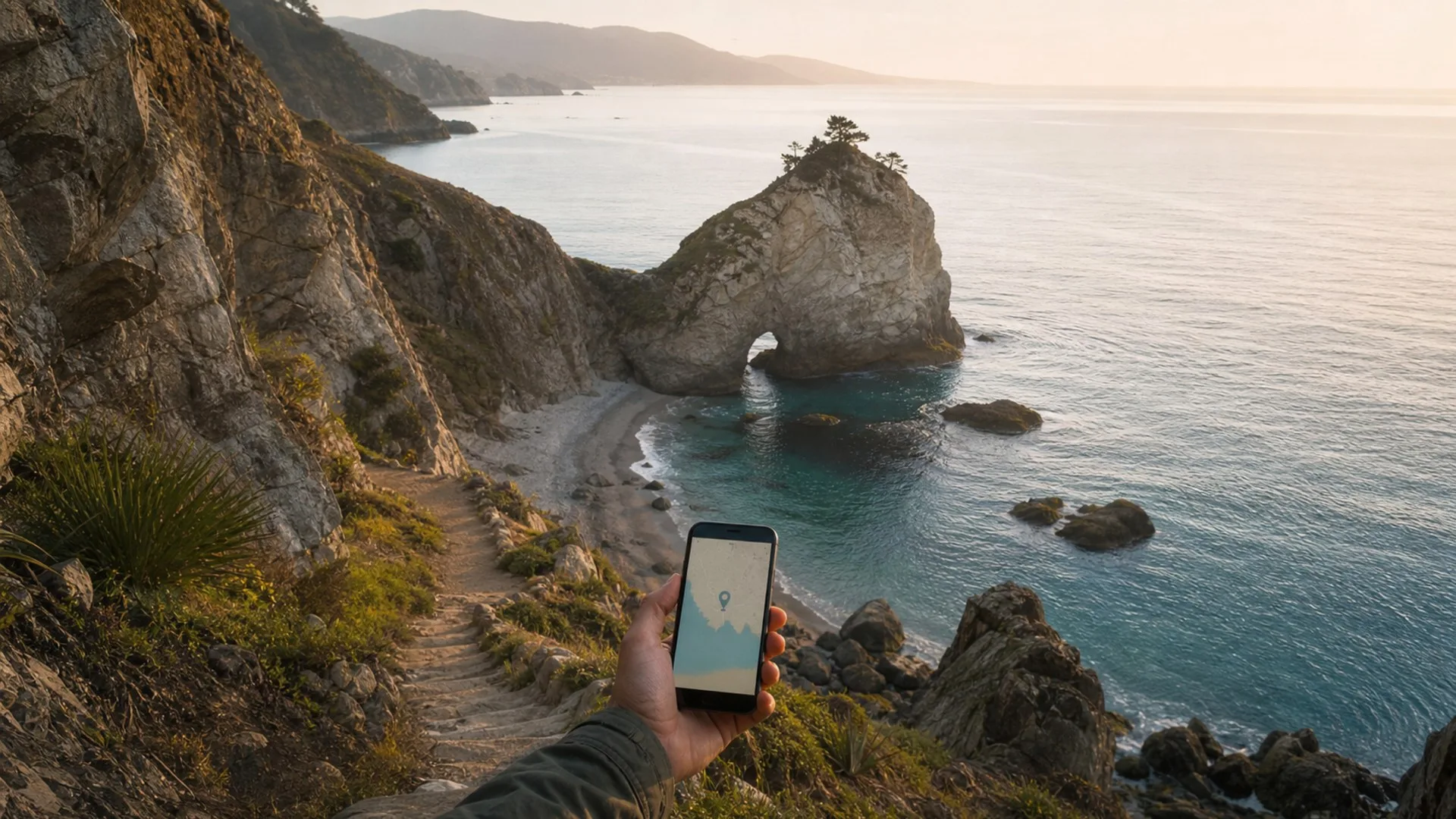
Geotagging changes hidden travel destinations by reducing the effort needed to reproduce a visit. An exact tag is not just a label. It can complete a public clue stack that already includes a recognizable frame, a tide window, a sunrise time, a shuttle hint, or a visible access line. That does not mean every exact tag is reckless, and it does not prove that one post alone caused measurable harm at a specific place. It does mean hidden, fragile, and lightly managed places deserve a stricter precision test than hotels, museums, or visitor centers. The practical rule is simple: use exact tags for public, managed places that genuinely need precision, broad area tags when context is enough, and no tag when the pin would add route value without adding real public benefit.

Why geotagging changes hidden places faster than creators expect
Geotagging matters because a hidden place rarely becomes copyable through one element alone. The tag usually works as the last easy clue. Leave No Trace guidance explicitly supports thoughtful sharing rather than blanket secrecy, but it also recommends broader state or region tags when precise location disclosure is unnecessary. National Park Service guidance at Glacier and Bryce Canyon goes further for sensitive settings by warning against directions to off-trail or fragile places. The useful lesson is not "never share." The useful lesson is that the label, the frame, and the planning clues work together.
A quiet place can absorb attention very differently from a named public venue. A museum, ferry terminal, or visitor center expects discovery and has infrastructure for it. A lightly managed cove, unofficial pull-off, wildlife-sensitive shoreline, or residential corner does not. The same amount of public precision lands differently depending on capacity, management, and how easy the place is to reverse-engineer from one good post.
That is where evidence discipline matters. Visitor-use research can help explain how social-platform data are used to study visitation, but the research base also has bias and representativeness limits. It is strong enough to justify caution and weak enough to rule out simplistic blame. Treat the real impact of geotagging as a copyability decision, not as a clean courtroom case about one creator, one post, and one outcome.
Use exact, broad, or no tag based on what the post makes easy to copy
The cleanest framework is not tag versus no tag. It is exact versus broad versus none. Each option serves a different mix of public value, place sensitivity, and copyability risk. If the exact name is the point of the post, precision can help. If the post is really about atmosphere, season, or a wider destination, broad context usually does the job. If the location itself is the sensitive detail, no tag can be the most useful and least theatrical choice.
Exact, broad, or none
Exact
Use when the named place is public, managed, and genuinely needs precision to stay useful.
Broad
Use when the region, district, coast, island, or park area gives honest context without pinpointing the last stop.
If your team wants a parallel policy lens, this exact-versus-broad tagging framework breaks the same decision into a repeatable editorial rule.
Exact tags fit public, managed places
Exact tags are defensible when the exact public place is the useful information. That usually means named hotels, museums, markets, visitor centers, public programs, ferry terminals, or official viewpoints that already expect visitors and are designed to be found. In those cases, removing the precise name makes the post less honest and less helpful.
The test is practical, not romantic. Would a reader struggle to act responsibly without the exact place name? If the answer is yes, exact precision may be doing real work. A post about a public eco-lodge, a guided heritage site, or a museum exhibition loses value when the venue disappears into a vague regional label. Precision reduces confusion there more than it increases risk.
Exact tags still need discipline. They do not automatically justify route-level caption detail, repeated parking cues, or a frame that walks a viewer through the last mile. Use the exact place name when it serves the reader, then stop adding unnecessary directional help.
Broad area tags preserve context without a pin
Broad area tags are often the best fit when the wider destination matters more than one exact stop. A city, district, valley, island, coastline, or park area can tell the truth without turning a scenic post into a map pin. This is the middle ground most teams underuse, even though it solves the real tension between usefulness and over-precision.
Broad tagging works especially well when the post is about atmosphere, seasonality, or destination character rather than one venue. A cliff walk may be the visual subject, but the useful information may simply be "north coast in spring" or "harbor district at blue hour." Readers get orientation. They do not get the exact stairway, cove, or turnout that made the frame possible.
This option should not read like coyness. A broad area tag is not a tease when the wider place name still makes the post honest. It is the right level of context. If the region tells the story accurately, stop there and let the caption handle the public details that matter.
No tag is the better choice for fragile or route-based spots
No tag is the better choice when the location itself is the sensitive part of the post. That includes fragile habitat, wildlife-sensitive areas, unofficial access points, residential corners, private-adjacent land, seasonal natural features, and places that can be triangulated from one frame once the timing is obvious. In those cases, precision adds curiosity and copy value faster than it adds public benefit.
This is not secrecy theater. It is proportion. If the post works as atmosphere, story, or travel judgment without a pin, leaving the pin out is a clean editorial choice. Protected-area guidance is useful here because it focuses attention on what location sharing encourages people to do, not just on whether a geotag exists.
One good gut check is the route test. If a cold visitor could pair the visible landmark, the low-tide or sunrise window, and one exact label into a repeatable visit, the post is already close to directions. That is the moment to remove the tag, simplify the caption, or change the frame before publishing.
Check the whole post, not just the location label
The location label is only one part of what makes a post easy to copy. A broad tag can still fail if the frame shows the exact rock arch, the quiet access line, the empty shoulder-season timing, and the small parking clue all at once. A precise tag can also be less risky than it looks when the place is a named public venue and the rest of the post stays non-directional. The point is to audit the full clue stack, not to treat the geotag as the only decision that matters.
Start with the image. Can a viewer identify the landmark, the turn, the path surface, or the approach from what is visible? Then move to timing. Does the caption quietly reveal the low-tide window, sunrise advantage, weekday calm, or shuttle gap that makes the place usable? Then check the practical lines. Are you naming the exact pull-off, the shortcut, the side gate, or the non-obvious approach when an official entrance or general region would have been enough?
Captions should carry useful public context instead of covert directions. Good caption context includes season, official access type, permit logic, weather sensitivity, etiquette, crowd reality, or the fact that the calm frame depended on timing. That makes the post more honest and less copyable at the same time.
The simplest edit is often subtraction. Remove the detail that behaves like instructions and keep the detail that helps someone understand the place responsibly. If your team sometimes names places later, this piece on delayed naming without turning a post into directions is the adjacent workflow to study.
Review the profile at outsider scale before publishing
One careful post can still become too precise once it joins everything else that is already public. Visitors do not read a hidden-destination post in isolation. They scan the bio, recent posts, saved trip collections, pinned recaps, and any other visible surface that helps them fill in the missing pieces. A broad tag on one post can function like an exact tag when the surrounding profile keeps repeating the same shoreline, path, season, or access story.
That is why an outsider review matters before and after publication. Before posting, read the draft like a cold visitor would. After posting, check again once the piece sits next to the rest of the profile. What looked vague in isolation may become obvious in sequence. Three coastal posts, a saved weekend itinerary, and a pinned recap can narrow a destination far more than a single caption ever could.
This is not an analytics exercise. You do not need hidden engagement data to run it. You only need the public surfaces that a stranger can inspect in one pass. If those surfaces quietly assemble the route for them, the profile is more precise than the individual post suggests.
Build one rule your team can reuse
Small teams do not need endless debate about every cove, lane, or lookout. They need one rule that survives deadlines and handoffs. The rule should ask two questions in order: does the exact tag help a reader act on a legitimate public place, and would the post still stay useful with a broader label or no label at all? If the second answer is yes, the exact tag usually has not earned its place.
The best policy is boring on purpose. Use exact tags for public, managed places that genuinely need precision. Use broad tags when the wider destination is enough. Use no tag when the location itself is fragile, low-capacity, unofficial, or too easy to reverse-engineer from the public clue stack. Escalate unusual cases such as wildlife sites, residential corners, private land, or unstable seasonal features instead of improvising in the caption.
Publish gate for hidden places
- exact tag identifies a public, managed place that expects visitors
- caption adds official access, timing, or etiquette context without route clues
- image does not expose the last mile through landmarks, parking cues, or access lines
- recent posts, saved collections, and pinned recaps do not quietly supply the missing map
- if doubt remains, publish with a broader area tag or no tag
The hard takeaway for this article is narrow on purpose: the right geotag is the least precise one that still keeps the post honest and genuinely useful.
FAQ
Does every quiet destination need no tag?
No. The better question is whether the exact label helps someone find a legitimate public place or simply removes the last bit of effort from a low-capacity scenic post. Quiet does not automatically mean secret, but low public value and high copyability should push the tag broader.
When is a broad area tag enough?
A broad area tag is enough when the wider destination gives truthful context and the exact stop is not the practical point of the post. If the region still tells readers what kind of place they are seeing, precision is often unnecessary.
Should the caption explain why the tag stays broad?
Usually yes. One plain line about sharing the region, the official access type, the season, or the etiquette gives readers context without sounding performative. That is more useful than teasing a hidden spot while pretending the restraint explains itself.
Can sharing under-visited regions still help readers?
Yes, but keep the scale straight. Broader destination discovery is different from handing out route-level disclosure for one fragile stop inside that region. You can widen attention without making the most sensitive corner frictionless to copy.
Read next
Continue with adjacent articles that support the same public-viewing workflow.
tips
Creating Authentic Travel Content in an Over-Filtered World
Learn which public-facing cues make travel content feel grounded, how far editing and geotags should go, and how to review a post like an outsider before publishing.
discoveries
Why Local Travel Content Is Outperforming Luxury Destinations
Identify the cues that make local travel content more useful than luxury mood shots, with a simple audit for bios, highlights, captions, and trip logic.
discoveries
The Rise of Virtual Travel Communities
See how virtual travel communities become legible through recurring destinations, highlights, collaborations, comments, and location choices.