
How Travel Creators Are Changing the Way We Explore the World
See how travel creators shape destination discovery through bios, repeatable post patterns, captions, highlights, geotags, and a quick usefulness audit.
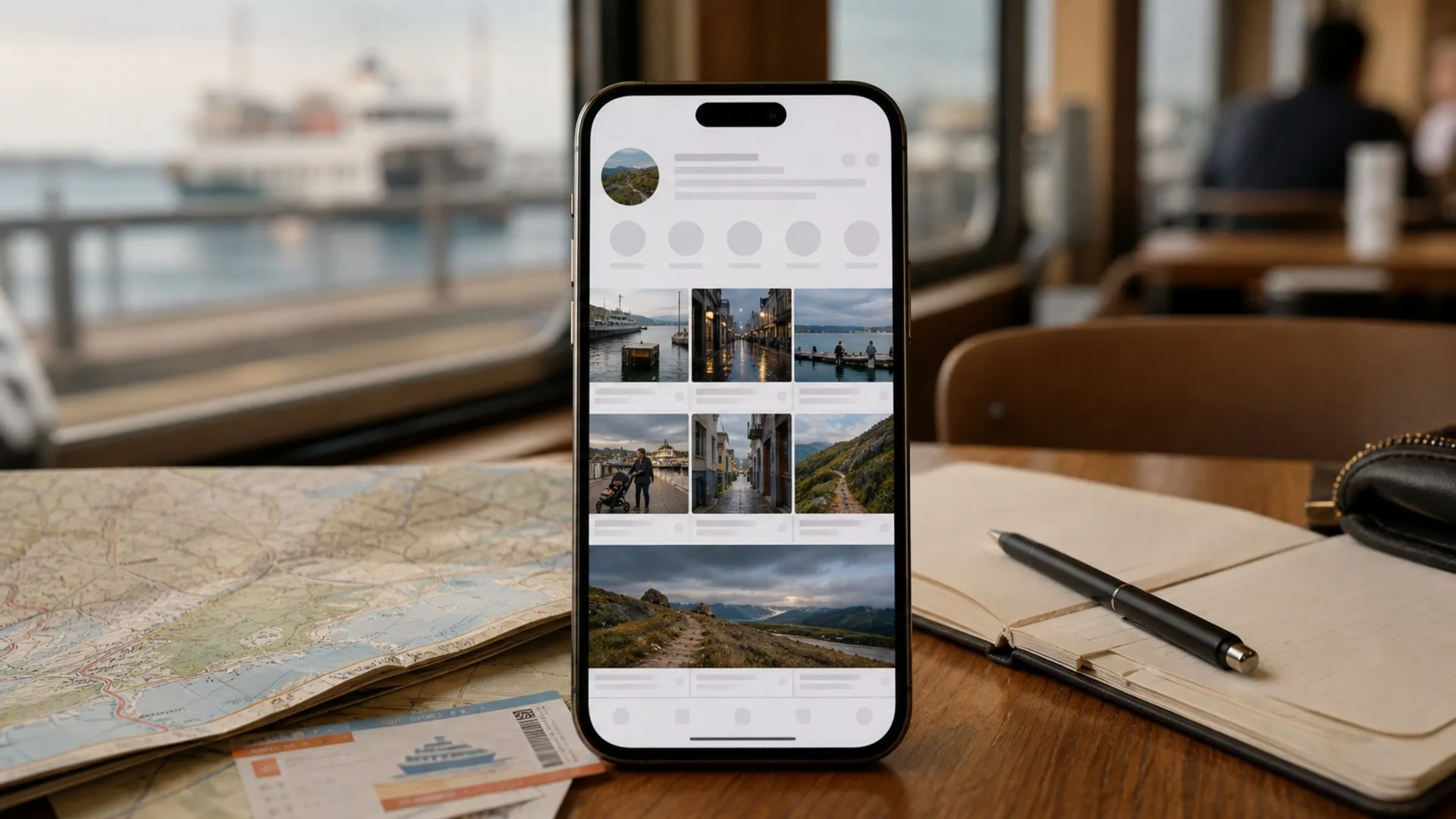
Travel creators are changing exploration by turning vague destination ideas into readable trip formats before booking starts. Viewers are not only saving pretty places. They are borrowing pace, effort, route shape, and audience-fit from repeated public cues. Expedia Group's 2025 Traveler Value Index says more than 60% of consumers cited social media as a source of travel inspiration, up from 35% in Expedia's 2023 survey. That first pass is useful, but it is still a first pass. Public travel content can narrow a shortlist and tell you what to verify next. It cannot confirm safety, current prices, transit reliability, or whether the trip works for your version of the trip.
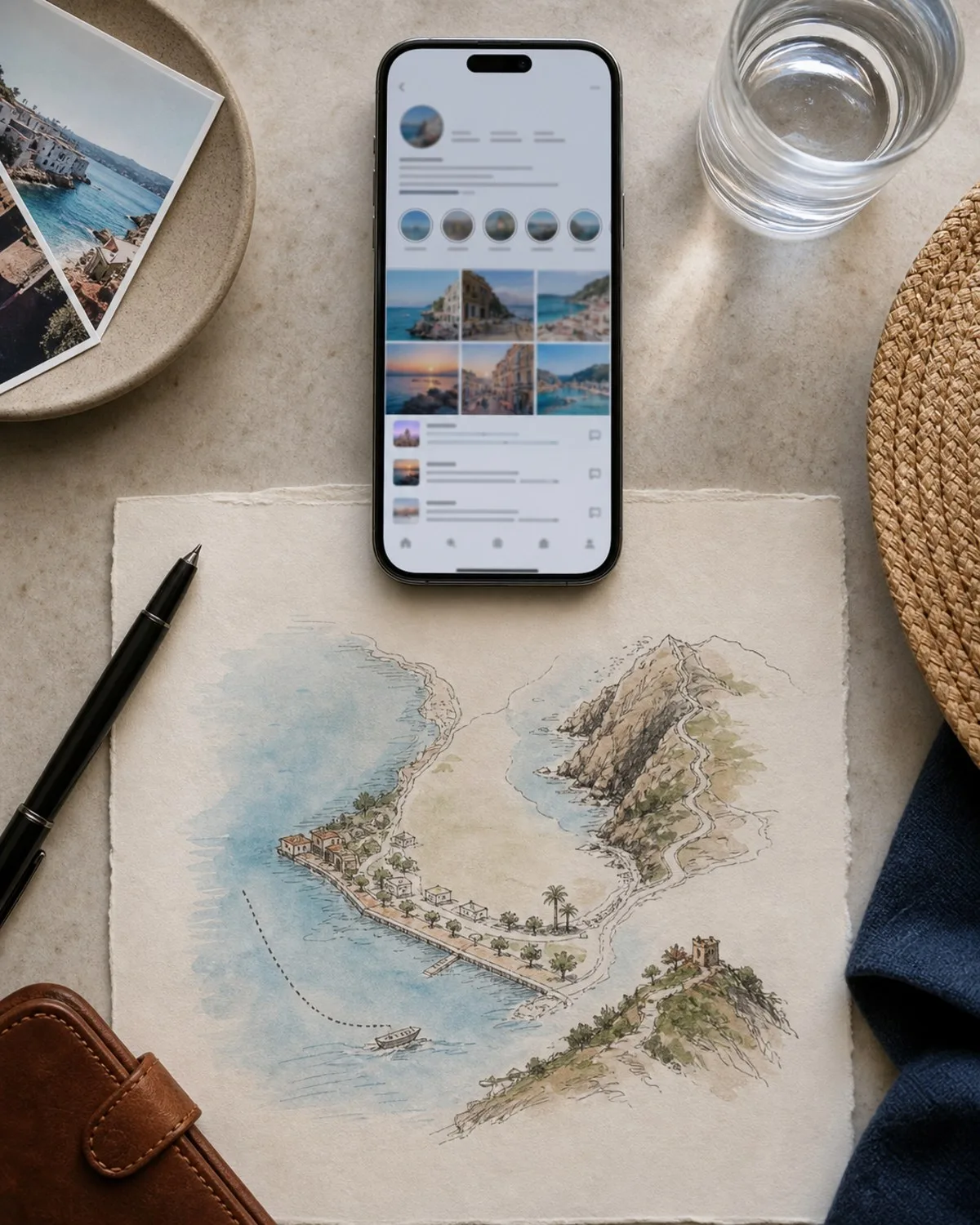
Travel creators now shape exploration before booking
Travel creators now influence the trip long before someone opens a booking page. The change is not only that more travel ideas circulate online. The bigger shift is that public travel profiles now do part of the early sorting work. A stranger can scan a bio, a recent run of posts, a row of story collections, and a few captions, then come away with a working guess about whether the place feels slow or hectic, compact or spread out, family-friendly or friction-heavy.
Expedia Group's destination-research work makes that timing shift clear. Its path-to-purchase research says three-fourths of travelers use search engines, meta travel websites, and social media during the research phase. That means creator content often enters the decision before maps, rates, or official attraction pages have done their job. The destination is no longer only a dream or a name on a list. It arrives with a rough operating manual attached.
That is the practical difference between old-style inspiration and creator-led exploration. A glossy destination image can make a place desirable. A readable creator profile makes the place easier to picture as a real trip. It gives the viewer enough structure to decide whether the destination deserves the next ten minutes of research.
From destination inspiration to trip format
Trip format is the repeatable shape of the trip that a viewer can understand from public clues. It includes pace, walking effort, stay type, route logic, timing pressure, and who the day seems built for. A car-free island weekend, a stroller-friendly city base, a food-first neighborhood crawl, and a weather-sensitive ridge walk are different trip formats even when they happen in equally photogenic places.
That is why creator content matters before booking. The most useful posts do not only sell scenery. They show what kind of day keeps appearing, what kind of effort keeps returning, and what kind of traveler the place actually suits.
The profile signals that make a place easier to decode
A place becomes easier to decode when the same travel promise repeats across the visible surfaces of a public profile. Readers do not need a perfect archive to make a judgment. They need consistency. If the bio, recent posts, story collections, captions, and location choices all point in the same direction, the place starts to feel legible instead of atmospheric.
The order matters. Most people read a public travel profile the way a cold visitor does: top line first, recent posts second, stored story groups third, captions after that, then any location pattern that keeps resurfacing. Each layer answers a different planning question. Who is this useful for? What kind of trip keeps showing up? What details survive after the photo scroll? How literally should I copy this stop or this route?
One strong image can pull attention. It cannot do the whole planning job alone. What persuades a stranger that a place is understandable is repetition across surfaces. That is where creator-led travel discovery becomes more than mood.
Bio promise and audience-fit
The bio does the first sorting job. A clear promise such as weekend train escapes, rain-friendly harbor walks, compact family bases, or long-form food routes tells the viewer what kind of traveler the account helps. That kind of clarity lowers interpretation work fast. Without it, every later post asks the reader to guess what the profile is really good at.
Bio clarity is not about status or branding polish. It is about fit. A sharp bio helps the right reader stay and helps the wrong reader leave without confusion.
Repeated post pattern and recurring trip logic
Repetition is what turns inspiration into something comparable. If the last several posts keep returning to ferry docks, station exits, steep staircases, rainy boardwalks, compact guesthouses, or short local food runs, the viewer starts to understand the route logic of the place. The destination becomes readable because the same friction and the same rewards keep resurfacing.
One beautiful post can create desire. Repeated patterns create trust. They show what the trip keeps asking for rather than what one lucky frame happened to catch.
Story collections, captions, and sequencing cues
Story collections and captions carry the operational layer of a trip. This is where scenery becomes usable context. A photo may show a viewpoint or a quiet hotel terrace. A caption can explain that the climb is exposed after noon, the ferry back fills quickly, the station entrance is farther than it looked, or the market only really works in the first hour of the morning.
Story collections do the same job over time. They preserve the repeat questions that travelers actually have: transit, weather, kids, room size, budget, steep sections, food timing, or beach access. When that layer is missing, the account can still look polished and still feel vague. That is the same creator-side failure behind how to keep travel content useful instead of over-styled.
What audiences actually copy from creator content
Audiences usually copy pace, fit, and friction more often than they copy one landmark. The real influence of creator content is rarely "I saw that exact place and booked it." It is more often "I can picture what this kind of trip feels like, and it seems right for me." People borrow the day structure, the effort level, the mix of transit and walking, the kind of base that keeps appearing, and the tradeoffs the creator keeps making look worthwhile.
That behavior fits current travel research. American Express says in its 2026 Global Travel Trends Report that 79% of Millennial and Gen Z respondents are likely to seek local workshops or activities specific to the destination they are visiting. That kind of demand favors creators who show how a day works on the ground, not only what the skyline looks like from the best angle.
Useful creator content narrows the shape of the decision. It helps a viewer say, "This looks like a two-night ferry trip with weather risk," or "This city reads like a slow family base with short walking windows," or "This place looks beautiful but too climb-heavy for the trip I want." That is far more actionable than generic praise.
Pace, effort, and day structure
The strongest creator signals tell people how a day feels to move through. Repeated clues can show whether mornings start with a transfer, whether queues dominate the best stops, whether shade matters, whether the day breaks into short neighborhood loops, or whether the whole route depends on one exposed climb.
That is why day structure matters more than raw beauty. A readable day gives the viewer a testable mental model. A beautiful image without that model stays abstract.
Audience-fit, not universal best-of lists
Creator usefulness rises when the content helps a specific traveler picture their version of the trip. Families, solo walkers, budget-first visitors, food travelers, and low-friction weekend planners do not read the same post the same way. One of the most useful things a creator can do is make that fit visible instead of pretending the destination works equally well for everyone.
Specificity beats universal praise here. "Good for a short train weekend with little gear" is more useful than "perfect for everyone." Fit is a stronger planning cue than hype.
Location choices shape how literally a route gets copied
Location specificity quietly tells readers how closely to copy a trip. An exact stop usually says, "Look at this place closely." A broader area label says, "Read this as route context, mood, or neighborhood logic." Neither choice is automatically better. The question is what job the post is trying to do.
Booking.com's 2025 Travel Predictions adds a useful restraint signal. The company says nearly 44% of travelers would refrain from tagging locations in social media photos to keep crowds from rushing in and damaging the atmosphere. That does not mean exact naming is wrong. It means location precision has become part of the publishing decision, not background metadata.
For creators, the clean rule is simple: be exact when the stop itself is the point, and stay broader when the real lesson is route feel. For readers, the clean rule is just as simple: treat the level of specificity as part of the message.
Exact stop versus area-level context
Exactness works best when the stop itself carries the planning value. A ferry terminal, hotel, museum, visitor center, or clearly public restaurant often benefits from a precise name because the reader is supposed to inspect that stop directly.
Area-level framing works better when the creator is teaching neighborhood rhythm, coastline character, or the feel of a walk rather than one named pin. A district, harbor edge, island side, or park region can tell the truth more cleanly than an exact label when the route matters more than the stop.
Public travel content has a hard proof limit
Public travel content can frame a destination well, but it cannot prove the full conditions of a trip. That limit is where trust gets won or lost. A strong creator can narrow your uncertainty honestly. A weak reading mistake is to treat public cues as complete evidence.
Visible clues can help with the right questions. They can suggest pace, terrain, access style, likely family fit, route logic, and whether a creator tends to favor busy days or slow ones. Repetition makes those signals stronger. That is why public travel content is useful at all.
What it cannot verify is just as important. A public profile cannot confirm current crowd pressure, weather reliability, transport disruption, room quality on your dates, live pricing, safety for your specific needs, accessibility conditions, or whether a glowing mention was compensated. Even a recent-looking post may be missing half the decision.
The practical rule is not to distrust creator content. It is to use it for the job it can actually do. Let it help you form better questions. Do not ask it to finish the booking decision by itself.
What visible clues can suggest
Visible clues are strongest when they narrow the trip into something testable. Repeated ferry scenes can suggest transfer dependency. Frequent kid-scale framing can suggest family fit. Repeated compact rooms can suggest stay type. Consistent steep-path images can suggest effort. Those signals are useful because they reduce guesswork before deeper research begins.
What visible clues cannot verify
Visible clues cannot confirm whether the path is still open, whether prices still make sense, whether the water taxi still runs on the same timetable, whether the weather window is normal, or whether the route fits your mobility needs. Public travel content is a lead. Verification still belongs elsewhere.
A five-minute usefulness audit for creators and small brands
A quick audit is enough to tell whether travel content is helping someone picture a real trip or only admire a good-looking feed. The goal is not perfect polish. The goal is trip legibility. If a cold visitor can understand what kind of travel this profile repeatedly helps with, the account is doing real exploration work.
The test is short because the reading behavior is short. A stranger is not going to study every archive and every caption before deciding whether the account is worth more time. They will scan the obvious surfaces and decide whether the profile reduces or increases planning friction.
The audit checklist
Quick usefulness audit
- Can a first-time visitor tell what kind of trip this account usually helps with?
- Do the recent posts repeat route logic, not only a visual style?
- Do captions add timing, access, weather, effort, or tradeoff detail?
- Do story collections answer traveler questions instead of only storing memories?
- Is there a visible rule for exact versus broad location choices?
Signs the account is still a moodboard, not a field guide
The account is still a moodboard when beauty does all the work and context keeps disappearing. Watch for generic praise, disconnected recent posts, captions that add no planning value, random shifts in location precision, and a profile promise that sounds specific until the feed contradicts it.
Useful travel content reduces sorting work. Moodboard travel content outsources that work back to the reader.
Use creator content as a filter, not a finished itinerary
Creator content is best used as a first-pass travel filter. It can save time by telling you which places deserve deeper checking and which ones probably do not. It can help you understand pace, friction, and fit before you ever compare prices. That is a real advantage, and it explains how public travel content reshaped trip planning in the first place.
The hard limit does not weaken that value. It sharpens it. Let creators narrow the shortlist, help you picture the route, and make you smarter about what to verify next. Then hand the trip off to maps, official sites, transport pages, weather checks, and direct booking details before treating the plan as real.
That is the durable rule: use creator content to decode the place, not to close the case.
FAQ
Are travel creators replacing guidebooks and booking sites?
No. They are replacing part of the early discovery and imagination work, not the final verification layer. Creator content can help you choose what to inspect next, but it cannot replace direct checks on logistics, pricing, and present-day conditions.
Should creators always show exact locations?
No. Exactness helps when the stop itself is the planning point. Broader framing is often better when the real lesson is route feel, neighborhood rhythm, or a place that should not be copied too literally.
Can public travel content tell you whether a place is right for you?
It can suggest fit, pace, and effort with surprising speed. It still cannot prove safety, cost, current access, or universal suitability. Treat it as a useful filter, not a final answer.
Read next
Continue with adjacent articles that support the same public-viewing workflow.
discoveries
Why Local Travel Content Is Outperforming Luxury Destinations
Identify the cues that make local travel content more useful than luxury mood shots, with a simple audit for bios, highlights, captions, and trip logic.
discoveries
The Impact of Geotagging on Hidden Travel Destinations
Geotag hidden destinations with one practical test: how easily a stranger could copy the visit from the post, caption, and profile context.
discoveries
The Rise of Virtual Travel Communities
See how virtual travel communities become legible through recurring destinations, highlights, collaborations, comments, and location choices.